
From Afi to Oban: Expanding Community-Led Wildfire Prevention Across Protected Areas in Cross River State

Updated: Feb 26
| By Adora Onyile
When the dry season arrives in southern Nigeria, fire becomes part of everyday life for farming communities, especially those surrounding Cross River National Park (CRNP). Used traditionally to clear farmlands ahead of planting, fires can easily escape control, spreading from farms into forests, destroying livelihoods, and threatening some of West Africa’s critical wildlife habitat.
Building on years of community-based wildfire prevention work that has helped keep nearly 10,000 hectares of forest four years fire-free at Afi Mountain Wildlife Sanctuary, we are now taking our biggest leap yet.

We are launching a new community-based Forest-Guardian training program in and around the Oban Division of Cross River, a vast rainforest landscape spanning about 400,000 hectares. This is a scale up.
Preparing communities to prevent wildfires
The training brings together community members and national park rangers for hands-on practical sessions focused on wildfire prevention across seven communities surrounding the park. As the project rolls out, it will include improved wildfire risk monitoring, clearer communication of wildfire danger during peak seasons, coordinated patrols between communities and park rangers, and ongoing community fire awareness activities.
For farmers like Akamson Clement, a member of one of our focal communities in Afi, the absence of wildfires over the past four fire seasons has had practical effects on his farm and household. With technology-driven risk advisories that empower farmers like Mr. Clement on the best/safest time to burn farm brush, fewer fire outbreaks translate to avoided damages to crops and farmland. Farmer Clement is one of many who are better equipped to plan their fire use on farms during the dry season, eliminating uncertainty, thereby protecting the investments they make each year. Even when fires break out on farms, our community-led Forest Guardians spring into action, stopping fires on farms, preventing risk to the forest. What’s more, most Forest Guardians are farmers, who are proudly dedicated to the cause, not only because of the value to nature, but also the protection of livelihoods, which facilitates human wellbeing and growth.
“I made good money from my cocoa farm last year, bought myself a car, and I am building a house. But I am still a Forest Guardian because I’m passionate about protecting the forest from wildfires. I know what previous wildfires have done to this community.” — Akamson Clement, Forest Guardian, Katabang


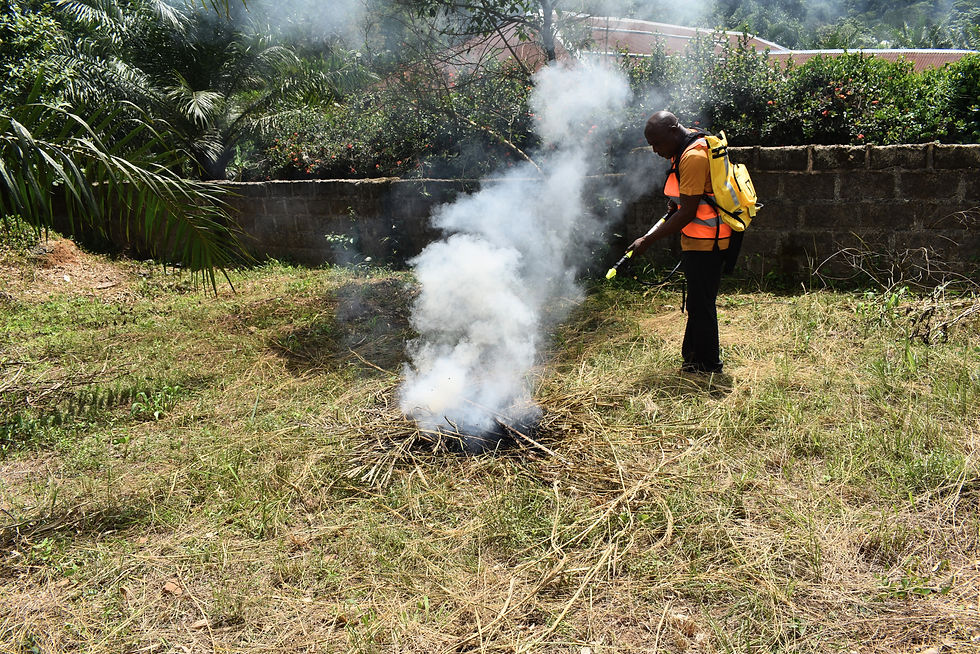
Forest Guardians responding to farm fires in Afi Mounitain Wildlife Sanctuary
The Oban Division of Cross River National Park is one of Nigeria’s largest rainforest landscapes. It supports endangered species such as the African forest elephant, chimpanzee, drill monkey, and holds the largest (estimated) population of the Endangered Short-tailed Roundleaf bat in a protected area in the country.
Uncontrolled fires pose a serious threat to these species by destroying forest homes and food sources. Like Afi, wildfires also destroy farms. Yet communities have limited access to training, equipment, and coordinated wildfire response systems to prevent and respond to fire incidents.

Once fully implemented, the program will train 50 Community Forest Guardians and 10 National Park Rangers to prevent and respond to wildfires, with a long-term goal of significantly reducing wildfire risk across this landscape.
As we approach our 10th anniversary, this expansion into the Oban Division reflects a careful step forward, building on lessons learned from Afi Mountain Wildlife Sanctuary and adapting them to a much larger and more complex landscape. As this work progresses, continued collaboration with communities and National Park rangers will guide how the program develops across the Oban landscape, protecting forest habitats while supporting the people who depend on them. We’re committed to scaling up progress for nature and people.
Stand with us as we take 40 giant steps forward.


Comments