

Species at Risk.
We work to protect some of West Africa's threatened wildlife
Bats
Short-tailed Roundleaf Bat
Hipposideros curtus

The rare, endangered (A2c) Short-tailed roundleaf bat is range-restricted with an estimated population of <1,500 individuals, making it one of the world’s most threatened bat species. It is dependent on old-growth, intact forest, and undisturbed caves. This small (7g) African leaf-nosed bat occurs in naturally small populations and forms colonies of no more than 10-15 individuals.

The endangered Short-tailed Roundleaf bat (Hipposideros curtus)
©SMACON
<1500
Estimated individuals remaining in the global population, making the Short-tailed Roundleaf Bat one of the rarest bat species. A single disturbance event in 2020 destroyed the only known maternal colony.
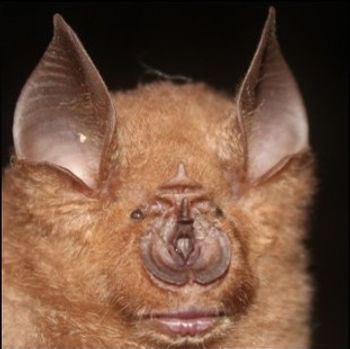
Upland Horseshoe Bat
Rhinolophus hillorum
In Nigeria, known only from the Obudu Plateau within Cross River National Park and Becheve Nature Reserve. A high-elevation specialist, this species faces threats from wildfires spreading from pastureland and is particularly sensitive to climate change.
Upland horseshoe bat (Rhinolophus hillorum)
©SMACON
.png)
Pangolins
%20_HEIC.png)
White-bellied pangolin (Phataginus tricuspis)
©Iroro Tanshi / SMACON
Pangolins are among the world’s most unique and critically threatened mammals. These shy, nocturnal insectivores provide essential ecosystem services such as pest control and soil aeration, using their specialized digging to manage termite populations and improve soil health.

All eight pangolin species are at high risk of extinction, driven by global demand for their scales in traditional medicine and their meat. Their primary defence, curling into a ball of overlapping keratin scales, offers no protection against poaching. In the regions where we work, protecting these species requires both habitat protection and rigorous anti-poaching efforts.
Our Approach

Monitoring &
Data
We track bat populations and key roost sites to identify where declines are most severe, and where protection efforts will have the most impact.

Community Partnerships
We work with communities near cave sites to build awareness, create alternative livelihoods, and reduce the incentives for hunting.

Awareness & Education
School programs and community outreach shift perceptions of bats: from feared or exploited to valued. When communities understand the role bats play in forest health and food security, protection becomes personal.

Conservation Network
Through the Curtus Conservation Network (CCN), in-country experts collaborate across the species' range to coordinate monitoring, share data, and drive targeted protection.


CAVE PROTECTION PROGRAM
Guarding the last known roosts in Nigeria
Within Cross River National Park (CRNP), part of the bat's range in Nigeria, SMACON supports targeted cave patrols led by CRNP rangers. These patrols focus specifically on priority roost sites of the Endangered Short-tailed Roundleaf Bat and the Upland Horseshoe Bat: monitoring disturbance, documenting colony status, and reporting threats to guide conservation strategies.

Rangers from Cross River National Park monitoring a cave for bats
© SMACON